
(I just didn’t know that’s what was going on)
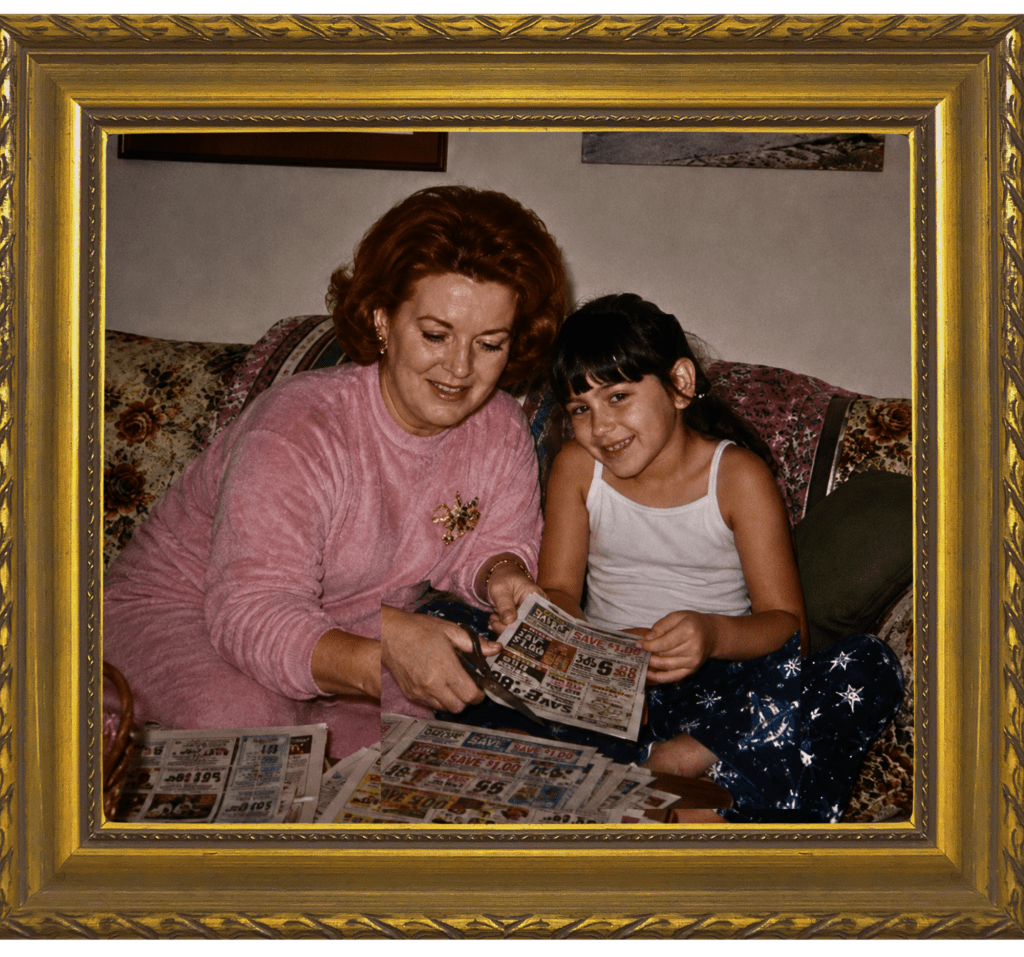
I was first introduced to budgeting as a child, probably as early as kindergarten, although I didn’t recognize it at the time.
My grandmother never sat me down with a lesson or handed me a workbook.
Instead, she taught me by inviting me into her weekly routine.
I followed her through grocery stores, watched her compare prices, clip coupons, and organize receipts. She made careful decisions about every dollar she spent.
To me, it just felt like spending time with my grandma.
It wasn’t until years later, after I became an adult and struggled financially myself, that I realized what she had actually been teaching me.
I found myself wondering, on more than one occasion, how she managed to work what felt like magic with a grocery budget of only $200 a week.
She didn’t just stretch it, either.
She somehow managed to keep our entire house stocked.
The refrigerator was always full. The freezer stayed packed. The pantry shelves never looked empty. We even had a second refrigerator and a deep freezer in the basement.
My grandfather gave her a grocery budget of about $200 each week, and somehow, she made it work.
She shopped at Giant, Shoppers, and Costco.
Giant was where she bought most of the meat because she was particular about quality unless Shoppers happened to have an exceptional sale. Lunch meat always came fresh from Giant’s deli. Every week, she’d order two pounds of roast beef, turkey, ham, and several different cheeses. Those lunches were for my grandfather, my Aunt Michele, and all of us kids.
Shoppers was where she’d buy most of the bakery items, produce, and shelf stable groceries.
Costco was reserved for bulk purchases, household supplies, toiletries, cleaning products, flowers, and anything else that made more sense to buy in larger quantities.
The stores changed slightly depending on that week’s sales.
Her strategy remained the same.
As a child, I thought I was simply tagging along while she ran errands.
Now I know I was being taught a crucial lesson in one day, managing my own household.
Being with my grandmother the majority of the time, and being the little idea machine I was, I was regularly bouncing ideas off of her almost as much as they came to me. As exhausting as I imagine I was, she never discouraged my ideas, no matter how unrealistic they were.
Instead, she let me explore them.
If it was something where I struggled to articulate properly, which would end in me feeling discouraged, she would reassure me in unique ways that pushed me to finish my delivery. If she saw I was getting distracted, she’d gently redirect me. Even in instances where she already knew how something would turn out, she’d still let me experience it for myself because she understood something I wouldn’t appreciate until much later.
Experience teaches lessons that advice never can.
After one of my failed attempts, she never left me alone to feel embarrassed or defeated. We’d sit together, talk through what happened, figure out why something worked or didn’t work, and then move on.
It was almost like every idea became a structured lesson, looking back on it today.
I now realize how significant that was.
She wasn’t just encouraging creativity.
She was teaching resilience.
To give you an example of one of those lessons firsthand, I am going to paint a picture of something that didn’t necessarily take place for the sake of the post. I can confidently depict the details of how it would happen because, even though she’s no longer with us anymore, she was truly an individual. Her personality was a difficult one to forget, no matter the years gone by that could be used for interest. Just knowing her well enough to know how it would unfold, I can confidently portray her in the light I feel would provide you with the lens necessary for this post. The idea is extreme couponing. This idea of stacking coupons I’ve obviously depicted it taking place before it was a thing but, I used this idea specifically because its something so simple on one end but also not widely practiced at the time. It has a mixture of uncertainty and familiarity, which provides the right context I needed to appropriately portray how it would unfold.
I can picture the entire scene.
I’d walk into our living room, carrying a notebook full of crooked handwriting, poorly drawn charts, and pages of messy math.
“Okay, Grandma. Hear me out, I have an idea!”
She’d lower the paper she was reading, push her bifocals back up the bridge of her nose, look up at me curiously, and say
“Let’s hear it.”
I’d launch into my presentation with complete confidence.
“When I had a sleepover last week, I saw Bethany’s mom cutting out coupons, just like you do, only she had a ginormous stack of papers beside her. I asked her about it and she told me how she did it so i could cone home and tell you and I forgot about it intil now but yeah, anyways, we have to go out and get a bunch more then just the one. We need about fourteen more Sunday newspapers.”
She’d allow me to finish and then ask me,
“Okay… but where are we getting the money to buy all those newspapers?”
Without missing a beat, I’d confidently answer,
“Well, I’m sure there is an ATM we can stop by on the way to the store? “
At that age, I still believed the ATM was some magical money machine.
I hadn’t yet connected the dots that the money actually had to exist in the bank before you could withdraw it. I still had a little learning to do.
She would’ve probably reminded me that buying a stack of newspapers just for the coupon inserts seemed wasteful.
The rest of the papers would end up being thrown away.
If that argument hadn’t convinced her. I’d immediately start negotiating.“What if we donated the newspapers to the retirement home afterward?”
Then I’d quickly add,
“Only if you feel up to it.”
Today, I cringe a little thinking about that phrase.
As a child, I didn’t fully understand my grandmother’s physical limitations.
She lived with several chronic health conditions, yet hated being treated like she couldn’t do things herself.
“If you feel up to it” was probably one of the phrases she disliked hearing most.
Sometimes, even when she wasn’t feeling well, she’d push herself harder simply to prove she still could.
That was who she was.
I already know that I’d have to remind her as we were going through the motions a few different times that she needs to hold on, that I’d show her how it all comes together and to be patient with me and soon she’d see how it all would be justified, that we’d eventually recover the upfront costs, after it was all said and done.
Knowing my grandmother, even if she understood the assignment, there was a small chance she’d actually keep it up and adopt it into into her already established routine. It wasn’t that she was closed off to new ideas. She just wouldn’t deem it necessary .
But she’d listen either way.
She always did.
This imaginary scenario, without a doubt, would’ve turned into a real strategy that she’d allow me to lead, just for the sake of the experience.
After all, it wasn’t too much of a deviation from her normal routine.
Every Sunday, for as long as I can remember, we’d all sit together in the morning and read parts of the paper together and clip coupons from the newspaper and organize them by category. She’d write down the meals she had planned for the week in her trusty notebook, drafting a structured and multilayered grocery list thar she separated by the different stores we frequented.
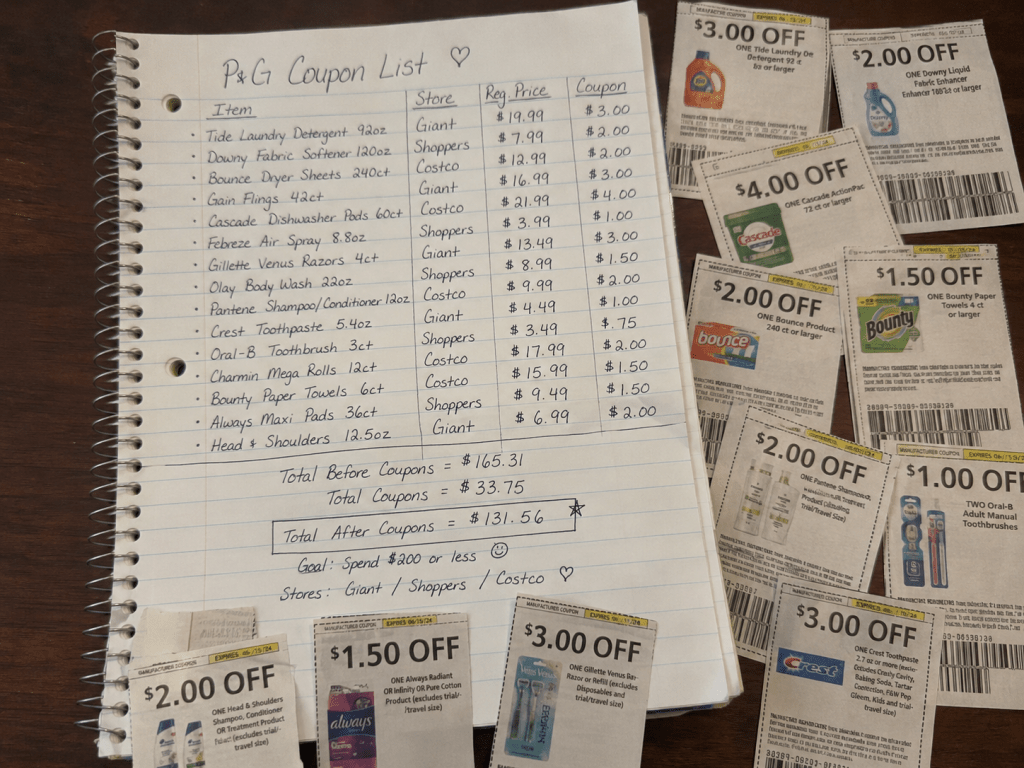
Back then, she just used the traditional manufacturer coupons we would cut each Sunday. If they had a few dollars off a particular item on our list, we’d make a note of it and clip the coupon and organize them by a ziolock baggy.
We didn’t overlook the other ads that varied by the week. We absolutely used them to gauge the best priced for specific things.
This strategy meant we’d instead be comparing each manufacturers coupon against every week’s store ads, looking for opportunities to stack multiple coupons with sale prices.
Let’s use Tide for an example.
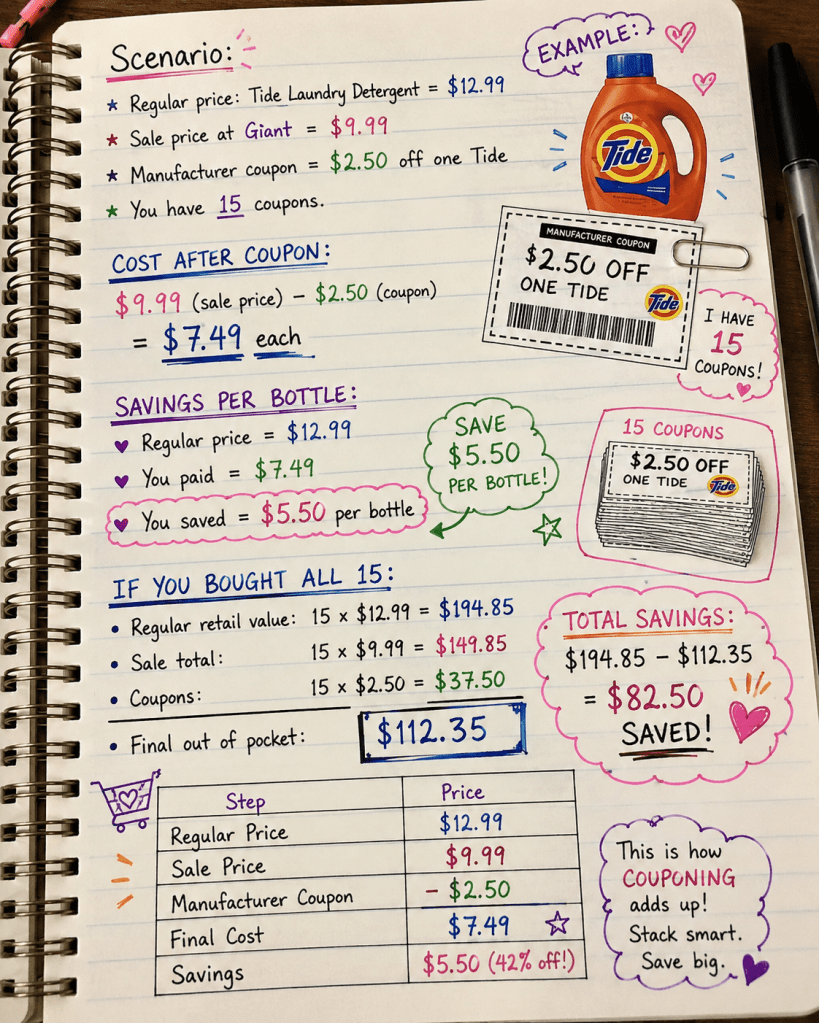
Tide is for sale at Giant.
The regular price of Tide is $12.99.
The sale price this week is $9.99.
On top of the sales price for the week at Giant, there is also a manufacturer coupon for $2.50 off one Tide. Now, with 15 newspapers with 15 coupon inserts you have
15 coupons for $2.50 off.
Stack that cost of the bottle after the coupon that takes the sales price of $9.99 minus $2.50 = $7.49 each. The final price of each bottle of Tide is now $7.49, ultimately saving $5.50 per bottle.
If you choose to take advantage of this $5.50 off per bottle, and you utilize all 15 manufacturer coupons and buy 15 bottles of Tide, you will only be paying $112.35 for 15 bottles that would typically be $194.85.
That means you saved $82.50 simply by combining the store sale with manufacturer coupons.
The bigger lesson isn’t just that you saved money today. The most important thing to take away is that you bought enough laundry detergent to keep your household stocked for months, maybe even a year, depending on your family size.
While everyone else is paying full price all throughout the year for detergent, Tide will already be checked off your grocery list.
That gives you more room in future grocery budgets for things you can’t stockpile, like milk, eggs, produce, or meat.
That’s the real power of couponing.
It isn’t about saving a couple of dollars on one shopping trip. It’s about buying tomorrow’s necessities at today’s lowest price.
Let’s do another item that’s regularly found in the p&g brandsaver.
Here’s the same concept using Charmin.
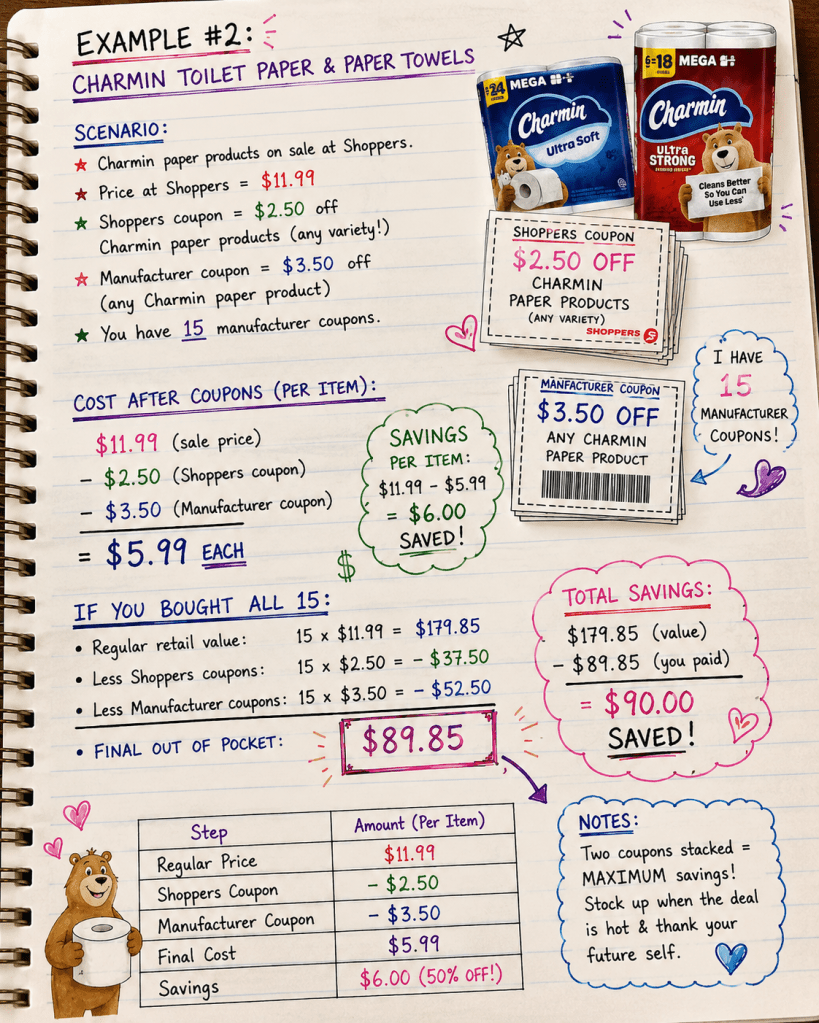
Instead of spending almost $180 on toilet paper and paper towels, you spend $89.85 and save $90.00.
The real strategy behind it was the money you spent, but the money you saved.
It’s that you stocked your home with enough laundry detergent and paper products to last for months.
Every week, someone else has to buy toilet paper and laundry detergent at full price.
Yours is already sitting in the closet.
That means more of your future grocery budget can go toward fresh food and other necessities instead of items you could have bought at their lowest price. That’s how small weekly coupons turn into hundreds, and eventually, thousands of dollars saved over the course of a year.
I know that I would be so proud of myself for carrying out this perfectly executed plan that she might potentially do again.
I might have contributed towards saving a few dollars, and that would have made me feel good.
Looking back on experiences in my childhood was how I was able to, after all this time, be able to describe how something like stacking coupons and accurately portray how it would go over in my house.
Not only was I properly supported in all my sporadic ideas, but in similar situations, like my hypothetical coupon project, I wouldn’t have just interrupted her Sunday routine.
It would’ve taken up the better part of the day and the small window of time that she felt physically well enough to be out.
Those good hours became more valuable as she grew older.
I never fully appreciated how much it took for her to give into my moments.
I do now.
Thinking back on my childhood can be painful sometimes. Most of all, because I miss the simplicity.
Anxiety didn’t live there.
Worry felt much farther away.
I was fortunate enough to grow up surrounded by experiences that quietly prepared me for adulthood.
They were shaping me into the woman and mother I would eventually become.
I really didn’t fully recognize the lessons until life placed me in the exact situations they had been preparing me for.
When I became a teenager, though, I couldn’t wait to grow up.
I wanted independence without fully understanding responsibility.
I thought I knew everything despite having very little life experience to draw from.
I confused freedom with wisdom.
They’re not the same thing.
By the time I realized that, there was no turning around.
The consequences of rushing into adulthood followed me for years.
Ironically, some of my hardest seasons became my greatest teachers.
Financial hardship became the common denominator behind many of my struggles.
What I failed to realize was that I’d already been introduced to financial awareness years earlier.
I had simply dismissed those moments as ordinary childhood memories.
They weren’t ordinary. Not everyone has that growing up. I didn’t know how significant it was. Until I got older and saw my grandmother wasn’t just teaching me how to grocery shop.
She wasn’t just teaching me how to clip coupons.
She wasn’t just teaching me how to stretch a grocery budget.
She was teaching me how to think.
She was teaching me how to prepare.
She was teaching me how to build a life.
She had been teaching me all along.
My grandparents had already raised their own children.
They weren’t obligated to raise another.
They could have easily decided they were finished.
Instead, they stepped in because they understood something many people never do.
Sometimes, the greatest gift you can give someone isn’t money.
It’s an opportunity.
They weren’t trying to replace my mother.
They were trying to help her.
By raising me, they gave her something she desperately needed.
Time.
Support.
Stability.
The chance to go back to school, build a career, become financially independent, and create a life that didn’t depend on someone else continually rescuing her.
Looking back now, I see the strategy behind what they were doing.
They weren’t creating dependence.
They were creating opportunity.
As a child, I simply knew I was loved.
As an adult, I finally understood everything they were actually giving me.
I can’t allow a blog post to be written without giving you something to leave with, so here’s where I’ll leave it.
Extreme Couponing Still Exists, it’s just more Environmentally Friendly and Most of it Can Be Done from your Smart Phone and It Can Extend Much Farther Out then Just what Is commonly found in your Sunday Paper.
Forget everything you picture when you hear the word “couponing.” Today’s couponers aren’t carrying around giant binders stuffed with newspaper clippings. Most of the best deals can be found right from your phone in just a few minutes.
The biggest secret to saving money isn’t finding one great coupon. It’s knowing where to look and how to combine multiple savings opportunities into one purchase.
A lot of people assume extreme couponing ended when Sunday newspaper inserts became less common. The truth is, extreme couponing still exists. It just looks different than it did years ago.
Today’s couponers are using a more modern, convenient, and environmentally friendly approach. Instead of stacks of paper coupons and overflowing binders, most savings can now be managed directly from your smartphone.
Digital couponing allows you to access thousands of deals that go far beyond what was ever available in a Sunday newspaper. Manufacturer websites, store apps, cashback platforms, loyalty programs, and deal websites have expanded the possibilities for saving money on everything from groceries and household essentials to clothing, electronics, restaurants, and services.
The biggest difference is that modern couponing isn’t just about clipping coupons. It’s about finding opportunities to combine together. You can combine:
• Digital coupons
• Store promotions
• Manufacturer savings
• Cashback offers
• Loyalty rewards
• Rebates
• Clearance deals
• Seasonal sales
• Price matching when available
The Sunday paper used to be the starting point.
Today, your smartphone is your coupon binder, your savings planner, and your deal finder all in one.
Extreme couponing has become less about collecting piles of paper and more about using technology strategically to make every dollar stretch further.
Start Here: The Krazy Coupon Lady ⭐

https://thekrazycouponlady.com/coupons
If you only bookmark one coupon website, make it The Krazy Coupon Lady.
It is the gold standard of modern couponing.
Their team searches hundreds of deals every day and breaks everything down into easy, step by step instructions.
They show you exactly which coupons to clip, which stores have the best sales, what rewards to stack together, and what you’ll actually pay at checkout.
Whether you’re just getting started or have been couponing for years, this should be your first stop before planning any shopping trip.

The Krazy Coupon Lady App: Your Digital Coupon Assistant
The Krazy Coupon Lady (KCL) app brings modern couponing straight to your smartphone. You no longer have to search through newspapers, flyers, or dozens of websites trying to find the best deals. The app helps you find coupons, store deals, promo codes, cashback opportunities, and step by step breakdowns showing exactly how to save.
Download the app and customize it based on the stores and brands you shop for. You can create shopping lists, save deals for later, receive alerts when your favorite products go on sale, and learn strategies used by experienced couponers.
Not every coupon works the same way. Taking a few seconds to read the terms and conditions can save you time, frustration, and unexpected surprises at checkout.
Before using any coupon, check for:
• Expiration dates
• Purchase limits such as “Limit 1 per customer” or “Limit 4 identical coupons per day”
• Eligible product sizes, scents, flavors, or varieties
• Quantity requirements
• Whether the coupon is a manufacturer coupon or a store coupon
• Whether it can be combined with other coupons or promotions
• Digital coupon redemption limits, since many can only be used once
• Store specific coupon policies and exclusions
Think of the Krazy Coupon Lady app (KCL) as your digital coupon binder. It helps you find the deals, but the real savings come from learning how to combine those deals with store apps, sales, rewards, and cashback offers.
Here’s the link to the app to check it out.
Android:
https://play.google.com/store/apps/details?id=com.thekrazycouponlady.kcl
iPhone/iPad:
Search “KCL: Coupons, Deals, Discounts Promo Codes” in the Apple App Store
P&G brandSAVER

If your home uses brands like Tide, Gain, Charmin, Bounty, Dawn, Cascade, Pampers, Gillette, Crest, Febreze, or Swiffer, this is a must visit website.
P&G brandSAVER offers manufacturer coupons on many of the products families buy every week. Pair these coupons with store sales for even bigger savings.
Giant Food Digital Coupons
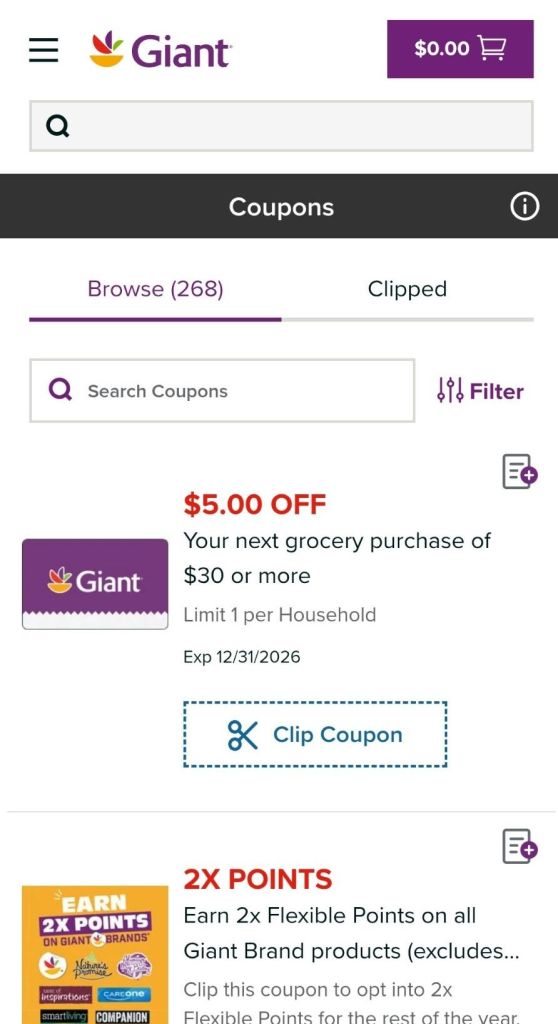
https://giantfood.com/savings/coupons/browse
Before shopping at Giant, log into your account and clip any digital coupons you think you’ll use. These coupons are automatically applied when you enter your phone number or scan your loyalty card at checkout.
When combined with weekly sales and manufacturer coupons, the savings can add up quickly.
Target Circle
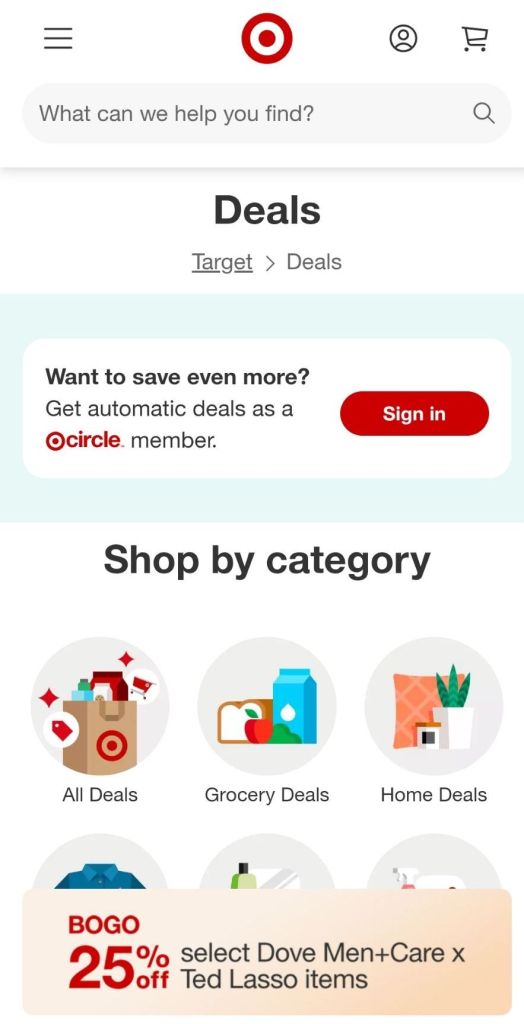
Target is one of the best retailers for stacking discounts.
Clip Target Circle offers in the app, combine eligible manufacturer coupons, watch for Target GiftCard promotions like “Spend $50, Get a $15 GiftCard,” and, if you have one, use a Target Circle Card for an additional everyday discount.
Many shoppers save far more than they realize simply by activating offers before they shop.
Walgreens
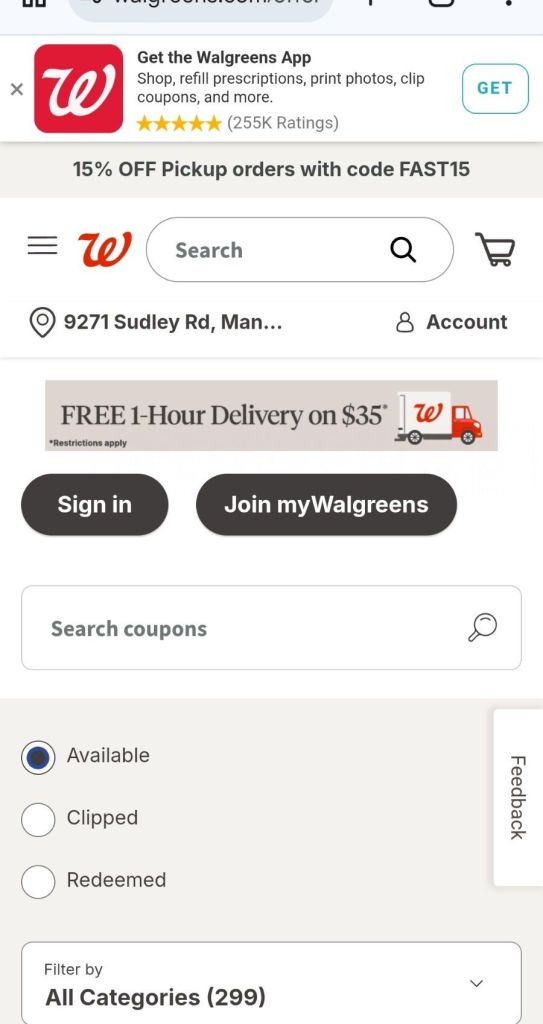
https://www.walgreens.com/offers/offers.jsp
Walgreens is another excellent place to maximize savings.
Take advantage of digital coupons, Walgreens Cash rewards, sale prices, and promotional offers. Many household, health, and beauty items can be purchased at a fraction of their regular price when multiple offers are combined.
Rakuten
Rakuten pays you cash back for shopping online at thousands of retailers.
Before making an online purchase, check Rakuten first. Activate the cash back offer, complete your purchase, and earn money back on purchases you were already planning to make.
Think of it as getting rewarded simply for clicking one extra button.
Valpak

Valpak isn’t just for grocery coupons anymore.
You’ll find discounts for local restaurants, oil changes, home services, entertainment, medical providers, retail stores, and much more. It’s an easy way to save money on everyday expenses beyond the grocery store.
Always Read the Fine Print
Not every coupon works the same way. Taking a few seconds to read the terms and conditions can save you time, frustration, and unexpected surprises at checkout.
Before using any coupon, check for:
• Expiration dates
• Purchase limits such as “Limit 1 per customer” or “Limit 4 identical coupons per day”
• Eligible product sizes, scents, flavors, or varieties
• Quantity requirements
• Whether the coupon is a manufacturer coupon or a store coupon
• Whether it can be combined with other coupons or promotions
• Digital coupon redemption limits, since many can only be used once
• Store specific coupon policies and exclusions
The Real Secret to Couponing
Most people think couponing is about finding one really good coupon.
Experienced couponers know it’s about stacking savings.
A single purchase might include:
A store sale
A manufacturer coupon
A digital store coupon
Cash back through Rakuten or another rebate app
Store rewards
A promotional gift card offer
Each discount lowers your total even more.
That’s how a product with a regular price of $15 can sometimes cost only a few dollars out of pocket.
The average shopper sees a sale.
A smart shopper sees five different ways to save on the exact same item.
Don’t Chase Deals You Don’t Need
A common mistake is buying something just because it’s on sale.
A great deal on something you’ll never use isn’t saving money. It’s spending money.
Before every shopping trip, ask yourself one question:
“Would I have bought this if there wasn’t a coupon?”
If the answer is no, leave it on the shelf.
The goal isn’t to collect deals.
The goal is to build a home, pantry, and budget that work smarter for you.
Track Your Savings Like a Pro
Saving money isn’t just about spending less. It’s about seeing your progress. When you track your savings, you stay motivated because you can actually watch your hard work pay off.
You don’t need anything fancy to get started. A simple notebook, planner, spreadsheet, or notes app on your phone works just fine.
Here are a few things worth tracking after each shopping trip:
Date of Purchase
Store
Amount Before Coupons
Amount Paid Out of Pocket
Total Saved
Cash Back Earned
Rewards or Gift Cards Received
Money Spent
Notes such as a great deal you found or coupons that will expire soon.
At the end of each month, total everything up.
Ask yourself:
• How much did I spend?
• How much did I save?
• Which store gave me the biggest savings?
• Which coupon source helped me the most?
• How much cash back did I earn?
• How much did I save this year so far?
Seeing those numbers grow can be incredibly motivating. Saving $20 here and $35 there may not seem life changing in the moment, but over the course of a year, those small wins can add up to hundreds or even thousands of dollars.
But don’t worry, we got you….again…
Your Free Extreme Couponing Tracker Below.
Save the photo to your device and print.
Or..
Download the template link below and save a copy to your canva to edit and use as much as you want!

Here’s the link:
https://canva.link/4xrmg0zmbcwhge6
Your Welcome!
*If you found this article helpful, leave me a comment!
XX












 The Xcerpts by Xposed™