I have to admit, I knew very little about Charlie Kirk before September 10th.
I had seen a few YouTube clips of him debating people on college campuses, going back and forth over whatever political or cultural issue happened to be on the table.
Honestly, I wasn’t particularly interested.
I remember watching him and thinking,
“Why is this man traveling all over the country just to argue with people?”
Once I realized how politically rooted his beliefs were, that didn’t make me any more interested.
I’ve never been particularly invested in politics, and I don’t really lean one way or the other.
I’ve seen enough over the years to become skeptical of what happens when people become so consumed with choosing a side that they stop looking at where the strings lead back to.
My son, on the other hand, is different.
He had recently developed an interest in politics after starting high school. He took Street Law as a freshman and unexpectedly loved it. Since then, he has shaped several of his classes around that general area of study.
He was actually the first person who told me what happened to Charlie.
Even though he was at school, where he was supposed to have his phone turned off, he somehow knew within minutes.
He still hasn’t told me how he found out so quickly.
I wasn’t there to witness the disruption he probably caused in order to get his teacher to allow him to call me, but I know my son, so I can only imagine.
When I first saw the high school’s number pop up on my caller ID, I assumed it was one of his routine calls. The calls he makes when something random pops into his head and some part of whatever it is will inevitably involve imposing on and inconveniencing me.
But this time was different.
As soon as he spoke, I knew it wasn’t that.
I recognized it in his tone.
It seemed like he was forcing himself to pretend he was unaffected.
After that conversation, and after seeing how much Charlie’s death impacted him, something changed in how I looked at Charlie.
I had assumed my son was doing what a lot of young people do now.
He had deliberately embraced some outrageous position that conflicted with his cultural and social preferences for no other reason than to act edgy and hopefully provoke people.
I figured his interest in Charlie was another form of what his generation had turned “trolling” into.
I soon realized I had completely misunderstood why my son followed Charlie Kirk.
Initially, I had just dismissed Charlie as another one of the accounts appearing in my son’s algorithm, something he watched for a few seconds before moving on to the next video.
I can’t tell you how many times he’d emerge from his room and interrupt me in the middle of whatever I was doing to show me a few second TikTok reel of Charlie.
I would look instead at his face and at how he reacted to the intensity that existed in those few moments, which had obviously been edited and stitched together as a highlight.
Charlie’s ability to remain remarkably composed while answering whatever challenge was put in front of him as he went from campus to campus seemed to fascinate him.
He spoke confidently, thought quickly, and articulated himself impressively, no matter how intense the exchange became.
All of those were qualities I knew my son admired and hoped to one day develop himself, especially if he remained in the area of interest he is currently pursuing.
What surprised me most was that his interest didn’t disappear after Charlie died.
Before I knew it, my son had pulled me into a miniature investigation.
Over the months that followed, we started trading information back and forth. He would find something, I’d find something else.
We’d watch YouTube videos, read articles, follow developments, and report back to each other.
The more I watched, the more complicated my understanding of Charlie became.
I had been guilty of accepting portrayals of him without taking the time to understand the context behind them. The more I learned about him, the more it forced me to examine some of my own assumptions, many of which had been shaped by stereotypes and social media commentary about Charlie.
After his death, I began noticing how often the clips circulating online weren’t ones commemorating him or honoring him.
Some were only a few seconds of him responding to a question that had been cut away, and without the context, an answer could look completely different.
I remember one particular short in which he said something along the lines of, “I hate calling somewhere and getting a rude Black woman on the other end.”
Maybe he genuinely didn’t like calling somewhere and getting a rude woman who happened to be African American on the other end of the phone.
I have my own grievances with customer service, where I feel the same way about getting a South Asian representative, literally no matter where I call.
How someone feels isn’t automatically wrong. The way they choose to describe that feeling, however, can certainly be criticized.
But if I had seen a clip like that before I started looking into Charlie, without any context, I probably would have formed a completely different opinion of him based solely on that one comment.
The original question was intentionally left out.
Why is this what’s being shown?
After his death, what is the relevance?
How does this, in any way, support or explain the rest of his work?
That made me start wondering whether the controversy surrounding Charlie had been spoon-fed to us all in small doses to overshadow the larger picture of who he was and what he was actually trying to accomplish.
If you take an honest look at Charlie and strip away everything you may have attached to him after consuming clips like that, what you find is something much simpler.
Charlie was a human being.
An American kid raised in the Chicago suburb of Prospect Heights.
He attended Wheeling High School, played sports, became an Eagle Scout, and by most outward measures was living the life of an ordinary suburban teenager.
But there were already hints of something different beneath the surface.
By high school, he was becoming increasingly interested in politics, volunteering for a Senate campaign, organizing around issues he cared about, and eventually making his first television appearance at just seventeen.
He wasn’t born into national political influence.
He didn’t begin with a massive organization, a podcast, a national audience, or a political machine behind him.
He was eighteen when he found Turning Point USA in 2012.
That was the point when the ordinary trajectory of a suburban Chicago teenager began to change.
Unfortunately, that same exceptional individual, a little over a decade later, was killed on September 10th, 2025, while speaking at Utah Valley University.
He accomplished a lot while here on Earth.
He took something he believed in, an idea he had, and relentlessly pursued it until it became a major conservative youth organization, all before he turned thirty years old.
What interested me wasn’t simply the organization itself.
It was what happened because of it that made the difference.
His origin story is inspiring to anyone who, like him, is an average American.
His dedication to working hard and achieving the goals he set for himself, without believing he needed anything more than determination and persistence, is a powerful motivator for anyone who feels discouraged at the starting line.
It’s easy to look at everything we don’t have and convince ourselves that we’re already behind.
His story is a reminder to stop counting what’s missing, keep moving forward, and never lose sight of the finish line.
He wasn’t beginning with the kind of established national platform he would eventually possess.
He built something, and that something eventually gave him an enormous audience and access to a generation that many adults struggled to understand.
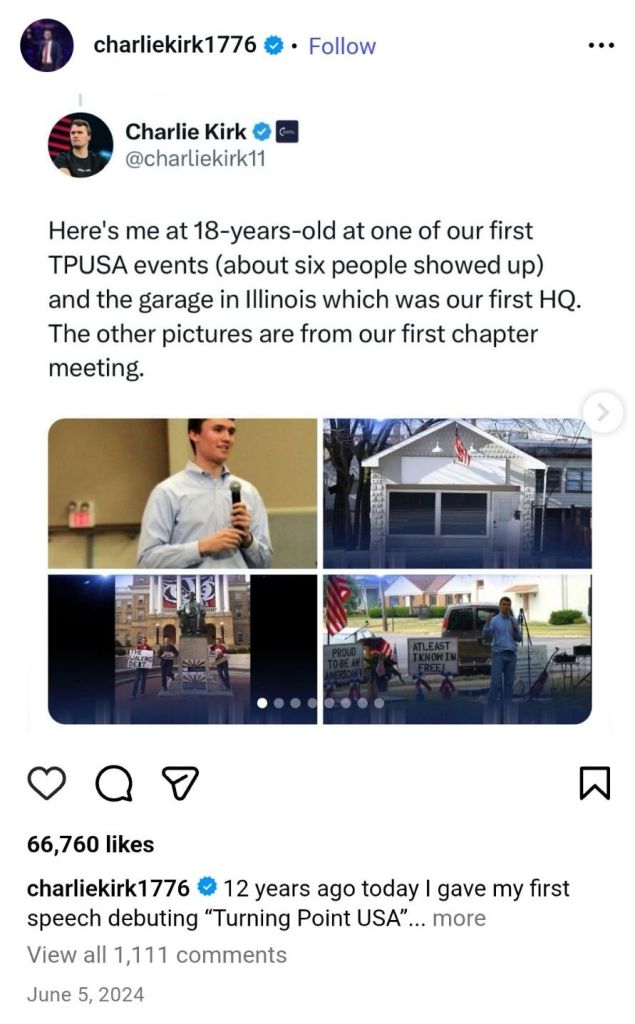
I found an Instagram post he shared on his page that showed his progression in a few photographs he had captured many years ago.
Check out that post below.
Before the campus tours, before anyone was handed the microphone, before the rallies, viral videos, podcasts, and national political influence, he had already identified the demographic he believed would shape America’s future and where he wanted to focus his energy.
Gen Z.
He consistently spoke about principles he believed mattered: faith, family, relationships, responsibility, hard work, and personal conviction.
Gen Z grew up in a technological environment unlike anything previous generations had experienced.
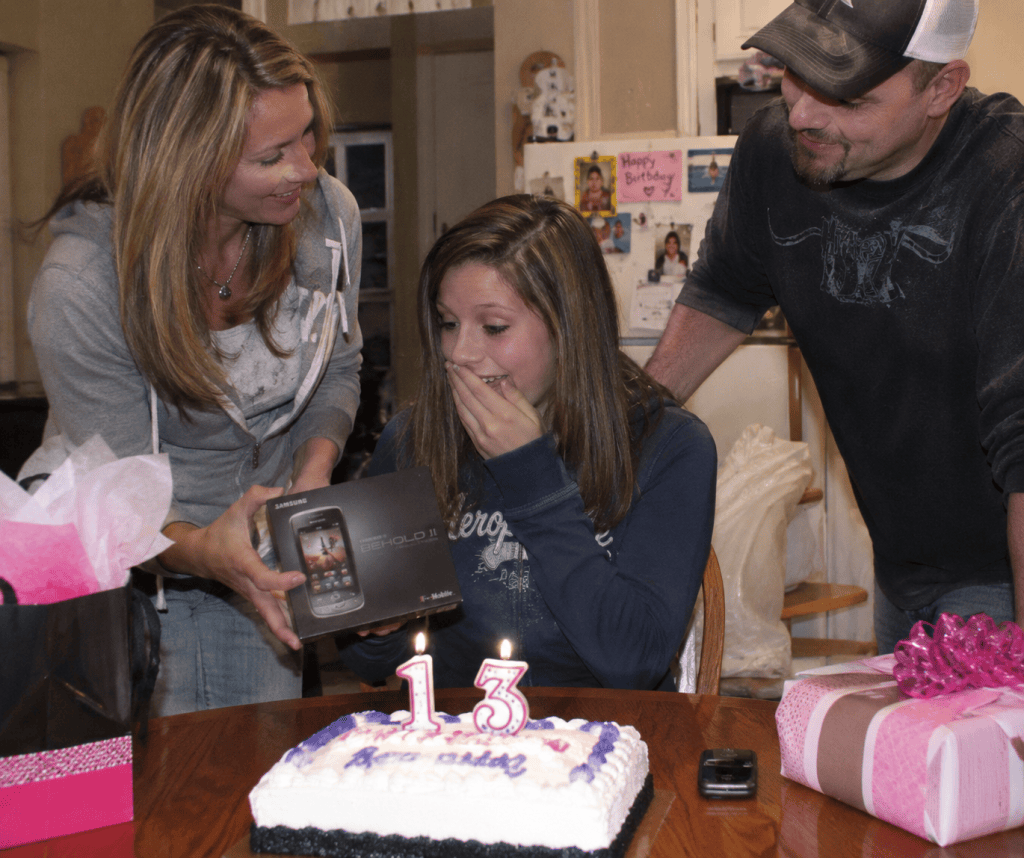
They were handed tiny rectangles of technology before most of them were old enough to understand how much of the world would eventually exist inside them.
At first, it was just a phone.
A way to stay connected.
A way to entertain a child.
A way for a parent to know where their kid was.
Nobody fully understood what they were handing over, and eventually, that little rectangle became the destination itself.
Friendships started there.
Arguments happened there.
People discovered one another there, and opinions were formed there.
You could watch relationships begin, marriages happen, divorces unfold, people become famous, lose everything, and rebuild their lives, all through a screen.
You could watch someone live an entire portion of their life through thirty second videos.
After seeing enough of this kind of content, you could start to feel like you understood someone.
But knowing what someone’s life looks like isn’t the same as knowing what their life feels like.
Gen Z became incredibly capable within the digital world while the divide between generations widened.
They could navigate technology their parents were still trying to understand, find information their parents had never heard of, and communicate with people their parents had never met.
Meanwhile, many of those devices had originally been handed to children for much simpler reasons.
Parents needed to work.
They needed a moment of quiet.
They were exhausted.
Sometimes, they simply gave in to the incessant pleas, claiming, “Everybody else has one.”
I don’t think either generation can be blamed entirely for what followed.
Everyone was learning the technology at the same time.
Nobody understood how profoundly it would reshape childhood, communication, or the relationship between parents and children.
Both sides inherited broken systems, broken trust, broken families, broken institutions, and adults who sometimes preached principles they didn’t practice.
Maybe the rebellion wasn’t the actual problem.
Maybe the deeper problem was collective mismanagement.
That’s what made Charlie’s approach interesting to me because he seemed to understand that telling them they were wrong wasn’t going to make them listen.
He knew it required a different approach.
He had to “get down on the floor with them,”
get on their level, meet them where they were, show interest that wasn’t motivated selfishly, allow them to challenge him, and be willing to challenge them back.
So he did.
He wasn’t afraid to walk into rooms where people disagreed with him, protested him, and sometimes openly confronted him.
Not everyone accepted his political positions, his views on tradition, or his religious beliefs.
But they still showed up.
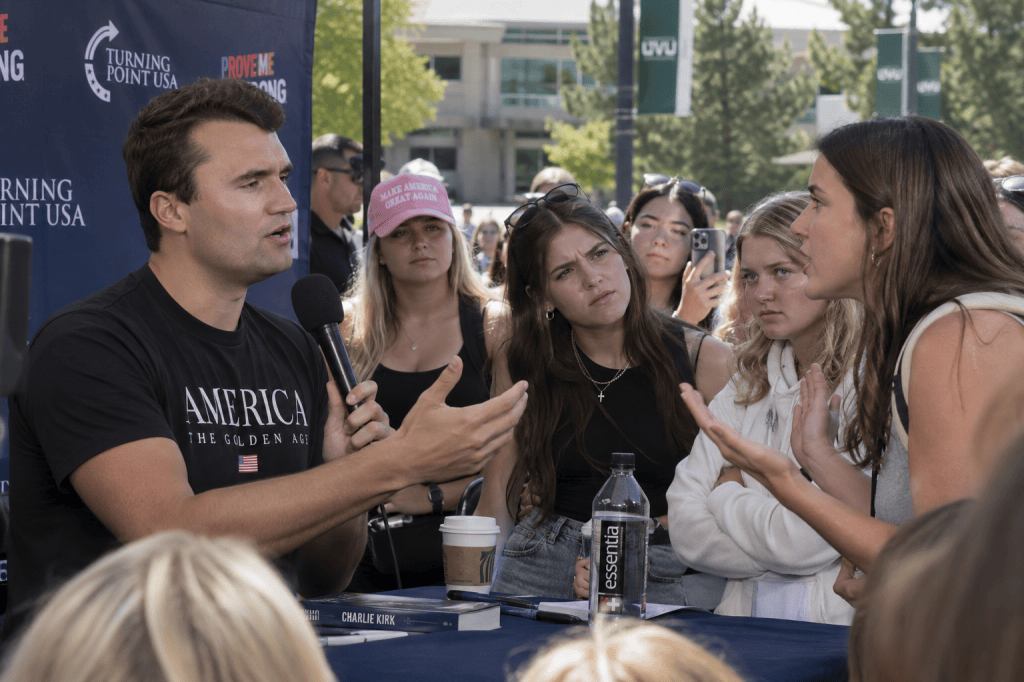
And Charlie kept meeting them where they were.
Maybe reaching Gen Z wasn’t originally where he expected to make his greatest impact.
But once he realized they were listening, he kept talking, and eventually, that created a lot of influence.
Influence changes the landscape around a person, sometimes so gradually that they don’t notice it happening.
Then, one day, they step back and look around.
The landscape has changed, and so have the faces.
None of that is inherently unusual because successful people are expected to build networks.
Organizations naturally seek relationships with influential people.
The higher up the ladder you go, the more you can understand the value of access.
But influence can also change the kind of people who begin showing up.
I found myself wondering whether Charlie’s persistence and work ethic may have caused him to overlook things he otherwise might have noticed.
I’m not questioning his ability to discern people.
I’m wondering if he interpreted the shared investment in his cause as shared loyalty.
Maybe some never gave him a reason to doubt them.
Maybe he trusted someone’s words without always examining whether their actions consistently matched them.
Maybe as Charlie’s influence continued to grow, he hadn’t fully recognized just how valuable he had become to other people yet.
As intellectually capable as Charlie was, I don’t think he recognized just how much influence he had.
Maybe he didn’t see how much of an impact he had over a group that had been considered an untapped demographic up until that point.
Maybe part of the explanation was that Charlie’s interests extended beyond politics. Politics was certainly a significant part of what he did, but his focus was not simply on influencing election numbers or driving people to the polls.
It was also about reinforcing why civic participation mattered, why people should exercise their right to vote, and why they should care about the direction of America.
From the outside, however, those efforts also created an opportunity for people who stood to benefit politically from that influence.
Gen Z represented a largely untapped voting demographic, and as Charlie’s influence within that generation grew, outside interests could potentially begin pushing into spaces where their objectives conflicted with what Charlie was actually trying to accomplish
That made me start wondering whether something less obvious could have entered the picture without anyone realizing it had slipped in through the back door.
And somewhere along the way, I became determined to find out whether Charlie recognized that possibility himself.
Something made me want to find evidence that he knew better.
Maybe it’s weird that I thought some of these things.
It really wasn’t a contribution to the research I was doing.
I couldn’t help but feel some kind of way having to sit with the idea of him not knowing.
After seeing so much of his life revolve around the consistent process of building one enormous dream brick by brick, I couldn’t stop thinking about how time-consuming that must have been.
How little time left for everything outside of it.
I am a firm believer in the philosophy that experience is one of the greatest teachers.
We all know that Charlie knew how to build movements, navigate politics, and handle public opposition.
But maintaining complicated personal relationships is a completely different skill set.
It might seem irrelevant for me to care about this, but I wondered if he ever experienced these kinds of relationships.
Had anyone ever gotten close enough to him to exploit his trust or disguise malicious intentions behind friendship, loyalty, influence, or even faith?
Some part of me wanted to believe he would have recognized it.
The mother in me wanted to believe he had experienced something like that in some way or another and had learned some valuable lessons afterward.
I don’t exactly know why I needed to get reassurance that he wasn’t blindsided by someone he overlooked.
Someone he trusted.
There was no public scandal available to me that neatly explained whether he knew just how horrible people could be.
There was no leaked relationship drama that suddenly made the headlines after his death to tarnish his reputation.
There was nothing that confirmed he knew how to weather these complicated bonds as well as he knew how to do literally everything else.
There were certainly controversies surrounding his politics and public statements.
There were criticisms of his methods and beliefs.
The more I looked, the more I realized that I wasn’t finding the kind of human error I had hoped I’d find.
I already know he was not involved in a string of premarital entanglements.
I just hoped to find something that could translate to me as a lesson he had learned about wolves in sheep’s clothing.
And I didn’t.
That almost made everything harder.
Charlie seemed to be one of the few people, if not the only one, who held such a controversial position yet managed to avoid the kind of personal scandals that can make people question whether someone’s public persona actually reflects who they are privately.
That made me happy, in a strange way.
But it made me sad, too.
Because so much of what Charlie became seemed to have been built through years of discipline.
But that’s where all his time and energy went.
It also meant that he didn’t just talk about the principles he believed in.
He appeared to make a deliberate effort to build his life around them.
His reputation, his relationships, his work, his faith, and the person he presented publicly were all intertwined.
I wondered whether Charlie had started realizing that some of the relationships around him were taking him further away from the things he actually believed.
Whether the upkeep and maintenance of certain bonds required compromises, he wasn’t willing to make.
Whether some of those compromises began colliding with the person he had spent his entire life becoming.
Had he recognized the red flags and tried to address them?
Had he overlooked them because the people involved initially appeared to be one thing, only to gradually become something else once they gained access?
Or had some of them simply been very good at hiding where they were headed?
I kept coming back to wondering if he had anyone attach themselves to him so gradually that their presence barely registered at first.
Something small.
Almost invisible.
Easy to dismiss.
And by the time the damage became obvious, the problem wasn’t confined to one place anymore. It had already spread into everything surrounding it.
Maybe that’s what influence can do.
Maybe that’s what access can do.
And if that was happening around Charlie, how much did he actually know?
How long had he known it?
And, perhaps most importantly, did he recognize what was happening before he ran out of time to do anything about it?
Coming to this realization almost made me want to accept the narrative they’d given.
I wanted to believe that the identified individual, with an alleged grievance and a potential motive that could be examined against things Charlie had publicly discussed, was enough.
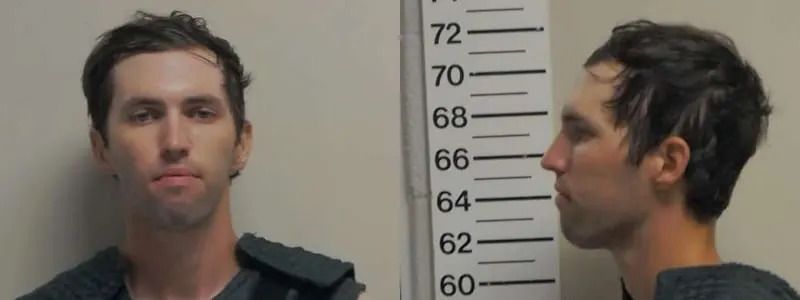
Maybe just because it was easier to digest.
Now, don’t misconstrue this side quest as me intentionally setting out to find proof that Charlie was a hypocrite or that he was secretly shady.
I just wanted something to make the truth hurt less.
The thought of him facing pressure professionally was not something I believe he’d miss or let go on for too long.
I am talking about people.
Interpersonal to extremely personal bonds and relationships.
My heart hurts thinking about the possibility of him not knowing, not realizing, or not understanding something until it was too late.
I just feel like, no matter what, Charlie didn’t deserve what happened to him.
We are taught that when people take on roles that come with influence and are considered controversial, the possibility of being politically assassinated is an occupational hazard here in the United States.
When someone steps into this role, they also accept the consequences that come with the position.
It’s almost as though the possibility of violence becomes part of the job description.
That isn’t what patriotism is supposed to be.
We are often presented with two choices.
Either believe the official explanation completely.
Or believe the conspiracy completely.
I don’t think those are the only choices.
I think there is a third option.
Investigate.
That is what I am to doing.
Because this isn’t history yet.
It’s happening in front of us right now.
The questions are still alive.
The people involved are still walking around.
The legal consequences are still unfolding.
The people who loved him are still living with the loss.
That makes this different.
It also makes it harder.
I don’t think the easiest explanation is necessarily the one that should be accepted simply because it’s the easiest to digest.
I don’t think the most complicated explanation should automatically be treated as more interesting simply because it is complicated.
Both can become traps.
The goal has to be evidence.
If someone I loved were killed in a similar way, I wouldn’t feel settled or remotely satisfied simply because someone was arrested.
Even if that person were eventually convicted and sentenced, I would still want to understand what happened. I don’t think I would even feel vindicated or relieved years later when they were being administered a lethal dose. Even if they were ultimately responsible, there would now be two lives lost, and I can’t imagine feeling relief at the loss of life of someone who was found guilty of taking the life of my loved one.
It’s not as if their death would bring my loved one back. They would still be gone. Their death wouldn’t be reassuring or capable of filling the space that remains empty where my loved one once was.
That’s what loss looks like.
This has less to do with criticism towards the investigators and more of my personal belief that they have the wrong guy.
I dont have any issue stating that I think the investigation has fallen short of what it should be, not should have been.
This is more of a general statment about what an investigation is supposed to accomplish.
Justice requires accountability.
Truth requires understanding.
Those aren’t always the same thing.
I’ve seen interviews and public statements from people in Charlie’s orbit who appear to communicate a desire to move forward after the arrest.
While I can understand that grief can make people feel anxious. It can make them want closure.
At the same time, life must go on, and organizations have to keep functioning.
But closure and truth are not interchangeable.
And I don’t think Charlie’s death should be reduced to the moment he was silenced for speaking the truth and exercising his right to free speech.
It diminishes all that he accomplished and who he was.
Because Charlie’s death represented something larger.
It’s not just one loss of life.
It represents something much more significant.
Whether someone agreed with him or couldn’t stand him, he passionately stood behind his beliefs, his country, and what he believed America could be.
He talked about America, patriotism, religion, race, politics, free speech, and the things he believed his generation was losing.
People can disagree with what he said.
They can criticize his methods.
They can challenge his politics.
They can believe he was completely wrong.
But he was undeniably trying to communicate something.
And he kept doing it.
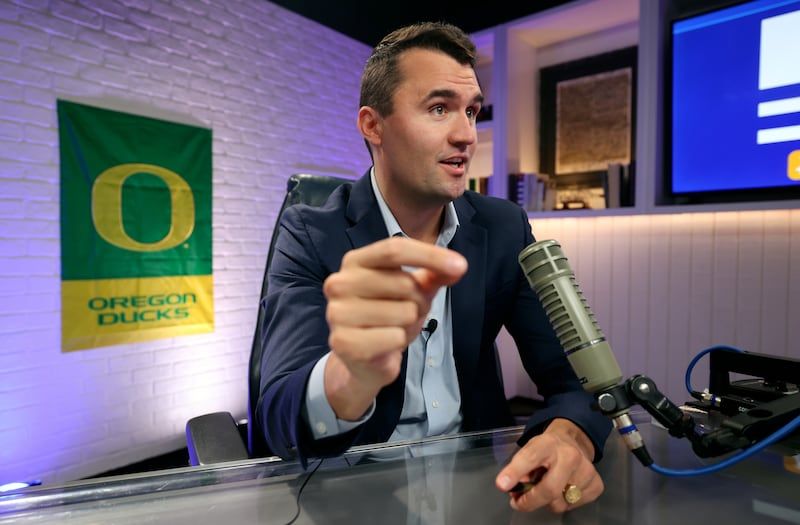
That is the part of his story that I don’t think we should lose.
If we get distracted by the misinformation campaigns that have these substantial budgets set aside to allocate to all the media outlets who line up to get their payout in exchange for defamation and diversionary content thats intended specifically to make sure the public stays “chasing their tails.”
They aren’t positively contributing towards anything beneficial.
They are only reinforcing this whole agenda that’s been created specifically to confuse us, desensitize us, distract us, and eventually lead into the area wheee we no longer care about justice the way we once did.
If someone can stand in front of an audience, exercise what he believes is his right to speak, demonstrate what he believes patriotism means, and then be killed, potentially by someone who may have coordinated a targeted plan that exploited that vulnerability, it raises a much larger question about what happens when people are allowed to speak only as long as they remain within certain boundaries.
The country Charlie loved and spoke about as though it were a first love became the same place where he was senselessly targeted. He lost his life in front of his followers in what appeared to be a public execution because someone was trying to send a message.
If his death was carried out in this manner for a reason, then the public deserves an understanding as to why and who was behind it.
That is what I believe should ultimately be the goal of the investigators.
They should feel obligated to relentlessly pursue all leads until they are able to get all the unanswered questions, answered, and the right person, tried according to the law for such a horrific crime they committed
What makes this even more difficult is that Charlie often spoke about the people he considered friends and trusted, including when he was reprimanded months earlier for going too deeply into the Epstein investigation.
He referenced several of them, saying he trusted them and their ability to continue investigating the subject and indicated that he would stop discussing it himself.
Those same people now appear to have fallen short when it came to conducting what many believe should have been a thorough investigation into Charlie’s death.
It is deeply disheartening to look at how many people Charlie repeatedly praised, defended, and commended, only to see what happened after he was no longer here to advocate for himself.
I believe Charlie would have been outraged to know what was happening right now.
If it had been someone else, even someone who was not necessarily his ally, I believe he would still have used his voice to insist that the investigation be thorough and that the process reflect what justice is actually supposed to look like.
I know I can’t be alone in how I feel about how deeply unsettling this is.
How we are all expected to simply move on because the person accused of the crime has been identified.
I don’t have any prior knowledge of this being something that is even on the table or has been discussed, but I will step up and be the first to say that I don’t want a day of remembrance designated for Charlie.
Because a date on the calendar means it’s history.
The questions surrounding his death need to matter while they are still questions.
The investigation needs to continue past just the arrest of a single suspect.
A suspect who has a few overlapping coincidences that have been reshaped into prosecutable evidence and a motive.
I want someone somewhere to do the right thing and help lead the investigation to the people or persons responsible, and they are held accountable for their involvement.
No matter who they are.
I want someone on the inside of the investigation, with the capability, to start doing the right thing instead of following directives that sway away from the things they swore to uphold when they first began their career.
I want human decency and self-worth to matter more than monetarily worth.
If we allow fear and exhaustion, or simply the desire for a convenient ending to a complex and overwhelming case, to convince us that we should stop asking questions, we create something much more dangerous than an unresolved case.
We teach the people watching that speaking comes with consequences.
We teach the next person who might have something meaningful to say to think twice before saying it.
And I don’t want that to be Charlie’s legacy.
In fact, after the research I have done on Charlie Kirk so far, I am even more convinced that staying quiet, being afraid to ask difficult questions, or avoiding uncomfortable truths simply because speaking up comes with consequences would be the last thing he would have wanted his death to symbolize.
If anything, what I have learned so far has reinforced the importance of doing the opposite: asking the uncomfortable questions, following the evidence wherever it leads, and being willing to say what needs to be said, even when doing so is difficult.
That’s another thing, in my opinion, that makes his assassination seem even more consistent with the possibility of someone acting out of a personal grievance or vendetta connected to Charlie’s most recent positions, rather than being a completely random act of violence.
So, as I close this portion of the introduction and move into the actual research, I want to make one thing very clear.
I do not want to carry my personal opinions into the sections dedicated to the research. I want the evidence to speak for itself, without my own assumptions influencing how it is presented.
If there is a point where I want to offer a personal observation, interpretation, or opinion, I will identify it clearly so there is no confusion between what the research establishes and what I personally think about it.
My intention is not to tell you who you should believe more than someone else.
My intention is much simpler.
I just want the truth.
And somewhere along the way, I think we can all agree that we have collectively lost sight of how much that should matter.
In this series, I deliberately stepped outside the traditional blog post or article, where opinions and information are often blended together and moved into the actual research to go into a different format.
It’s not entirely new territory. As you can see, I have done a similar process recently in regard to the d4vd case. It wasn’t as layered as this approach, but if you want to see a sneak peek into my method I am going to use in Part Two, here’s the link below.
Now, let’s get to the framework.
Part One is the first major research component of the series. It’s essentially everything I need you to know before I can take you where I am going next.
Rather than throwing a giant wall of information at you, I have broken it down into individual sections, each serving a specific purpose.
Here is how it’s structured:
We start the article with The Players, the Plot & the Premise because before we can dissect anything, we need to know who is involved, what happened, and what we were originally told happened.
Then comes The Timeline, the Turning Points & the Trouble, where we put the sequence of events in order and identify the moments when things began to change, unravel, or raise questions.
From there, we get into The Evidence, the Exceptions & the Exclusions, examining what evidence actually exists, what was into the case, what may have be entereden overlooked, what was excluded, and what appears to be missing.
Then there is The Statements, the Stories & the Shifting Versions, because what people said, when they said it, and whether those accounts remained consistent can matter just as much as the physical evidence.
Next comes The Connections, the Coincidences & the Crossroads, where we start looking at the people, relationships, events, circumstances, and overlapping details that may or may not connect to one another.
Then we have The Media, the Messaging & the Manipulation, examining how the story was presented to the public, how the narrative evolved, what received attention, what did not, and how the media environment surrounding the case may have influenced what people believed they knew.
We then move into The Theories, the Threads & the Things They Don’t Explain, where the competing theories surrounding the case are examined without automatically treating any of them as fact.
Then there is The Before, the Break & the Beyond, because the event itself did not happen in a vacuum. What happened before it, what happened at the center of it, and what happened afterward can all matter.
From there, we get into The Proven, the Problematic & the Pending, separating what can actually be established from what creates problems within the existing narrative and what remains unresolved.
Then we have The Missing, the Misplaced & the Mysterious, because sometimes what is not there can be just as important to investigate as what is.
After that comes The Questions, The Quandaries & The Quiet Parts, which is where we collect the things that still do not have satisfactory answers, including details that may have received very little public attention.
And finally, The Coverup Claims, the Conflicts & the Consequences, where allegations of concealment, withholding, manipulation, or interference are examined through what can actually be documented rather than simply accepted because the theory sounds compelling.
To keep this from becoming an absolute monster of an article, each individual section will have something I am calling a brief break that separates each section.
Here’s an example of the first section,
“The Players, The Plot & The Premise“:

The above is an example of one of the many brief breaks you’ll come across. They are essentially a page break and a condensed infographic combined into one graphic.
The purpose of the brief break is to give you the information you actually need to know about this part of the investigation before entering the next section.
On each of these brief breaks, they’ll have information like:
names, dates, relationships, photographs, timelines, evidence, major developments, and other relevant information and summarized events.
All of these are condensed in an easy to refer to graphic and section header to break up the different information.
Then, in the area below these graphics, I’ll do my best to summarize the section as briefly as possible so we can keep moving without sacrificing the information itself.
There will be some sections that are considerably longer than some of the others (the first and the second for sure).
There is so much that I provided in those first two sections that also has some info that falls into some of the other categories so, if you aren’t trying to call into work and use one of your sick days to travel with me down a few rabbit holes, I recommended to at the very least, read “The Players the Plot & The Premise and The Timeline, The Turning Points & The Trouble”.
Those are the meat and potatoes of the Earthly Investigation.
After all, Part One is not where I want to lose you.
There is an overwhelming amount of content surrounding this case.
There are videos, articles, posts, theories, commentary, reactions, timelines, screenshots, interviews, opinions, counter opinions, and probably enough recycled information to bury the actual facts underneath all of it.
In order for the Part Two to be done as accurate as possible, the Part One has to be intentionally thorough.
I need to know all the details before I can responsibly approach the case from an entirely different direction.
A detail that might appear insignificant to an investigator through a conventional lens can potentially become extremely significant when examined through an astrological analytical framework.
I guess the cats out of the bag if you didn’t already know.
Part Two’s Alternative Investigative Approach uses an astrological interpretive framework that combines natal birth chart data, synastry, and the celestial map for September 10, 2025, and layers all of it alongside the criminal investigative timeline.
This approach brings the astrological data into the same investigative framework established in Part One, allowing the charts, planetary movements, relationships, and timing to be examined alongside the documented events, people, discrepancies, and unanswered questions.
Needless to say, if I do not know a the details, I can miss a important connection.
If I miss the connection, I can miss the question.
If I miss the question, I have defeated the entire purpose of what I am trying to do.
That is why the Part One exists.
And yes, I’m fully prepared for people to show up and point out where i screw up.
I’m prepared ahead of time for those of you who come to argue and debate over the details or attempt to tell me that I didn’t do my homework.
That is exactly why I’m showing my work.
I have a completely separate, downloadable PDF available for those whose extracurricular activities include very discrimative critiquing.
I’ve gathered my research from several sources, including, but not limited to, reporting, commentators, independent researchers, legal discussions, publicly available documents, interviews, criminal case arguments, social media material, official records, and other publications surrounding the case.
The reference list, as mentioned above, will be provided as a downloadable PDF, included at the end of both Part 1&2, so readers can examine the material themselves rather than simply taking my interpretation at face value.
I know how much I value fact-checking, so providing the same opportunity to validate my research is extremely important to me.
If I say something, I want you to be able to go find it too.
If I misunderstood something or made a mistake, I want someone to point it out.
If I contradict myself in some way, I want that included.
If a claim can not be verified, I want that identified rather than quietly promoted because it makes the story more interesting.
I’m aware that not every question is evidence.
Not every inconsistency is proof of wrongdoing.
Not every suspicious circumstance has a sinister explanation.
Not every allegation deserves to become a conclusion.
In spite of all that, questions can still be worth asking.
You are going to notice a recurring theme throughout this investigation. Instead of giving you my conclusions, I instead ask you questions so you can form your own.
Which ones stand out to you?
Which ones align with something you were already thinking?
Which evidence deserve further examination?
Im not navigating over to get AI to compose some emptu body of text that can be found on Google.
That should be evident by now but I also need to mention that much of the above is personal and also just my opinion.
That’s why it’s here, in the intro.
Now, allow me to summarize part two.
Part Two moves beyond the conventional investigative record and into an astrological analysis of the people, the event, and the timing surrounding it. It examines Erika’s natal chart, Charlie’s natal chart, their synastry, and the planetary positions on September 10, 2025.
From there, those charts are layered against the timeline and findings established in Part One to look for patterns, timing, correlations, and points of unusual alignment.
The purpose is not to use astrology as proof of a crime, motive, or predetermined outcome. It is to introduce another analytical lens and see whether the same patterns identified in Part One appear differently when viewed through the astrological framework.
In other words, the Part One asks, “What happened, who was involved, what can we establish, and where are the discrepancies?”
While the Part Two asks, “When we place those people, events, and timelines against the celestial map, what patterns emerge?”
It is essentially taking the board we already assembled and adding another layer of information to it, then seeing whether anything becomes more visible.
What we will be looking at answers questions like:
What did the data actually show?
Where did it show up?
When did it show up?
What was happening at that exact point in the timeline?
Was there an independently documented event?
Was there a statement?
A relationship?
A communication?
A change?
A contradiction?
A missing piece?
Nothing?
I am cool with “nothing” being an answer, too.
Maybe some of what I find is the human brain doing what human brains do best.
Finding patterns in complicated information.
Maybe some of it turns out to be genuinely interesting but ultimately meaningless.
Or maybe we stumble across something that makes us stop and say, “Wait a minute, WTF..”
That is precisely why I am doing the experiment in the first place.
I am not asking astrology to tell me what happened.
I am asking it to show me what questions I might have missed.
Then, we take those questions back to the evidence.
And we see what survives.
Before we can begin asking what the stars might reveal, I want us to be clear about exactly what we’re looking for here on Earth.
Thats Exactly What We Will Do Next….
XX

